Markers & Free Shaping: Building Clarity, Confidence, and Connection
One of the biggest turning points in my own training journey has been learning how to communicate clearly with my dog.
When a dog truly understands what we mean, everything starts to make sense. Their confidence grows, their focus improves, and training becomes a conversation rather than a guessing game.
That’s where markers come in.
What Are Markers?
A marker is simply a signal that tells your dog, “Yes, that’s what I wanted.”
It pinpoints the exact moment your dog makes the right choice and helps them connect that action to the reward.
Markers can be a click from a clicker, a word like “yes”, or even a hand signal. What matters most is timing and consistency.
Once your dog understands what the marker means, it becomes one of the clearest ways to communicate across all areas of training, from obedience to confidence work to cooperative care.
The Different Types of Markers
Over time, you can build a full marker system that makes your communication with your dog even clearer. Each marker gives your dog different information about what they did right, when they should keep going, or when to try again.
Reward Marker
Your dog hears this the moment they’ve done something correctly. It tells them that a reward is coming.
Example:
“Yes!” followed immediately by food or a toy reward.
This is your main marker. Keep it short, sharp, and always followed by something your dog values.
Duration Marker
This marker means, “You’re doing great, keep it up.”
It’s used when you want your dog to hold a position, stay calm, or continue focusing on a task.
Example:
“Good…” said in a calm, steady tone.
It helps build duration and patience without confusion.
“Try Again” Marker
Sometimes our dogs get it wrong, and that’s completely fine.
An information marker simply lets them know it wasn’t quite right without any emotion or frustration.
Example:
“Oops,” “ah ah,” or “No.”
It’s a calm way of saying, “That wasn’t it, but have another go.”
Discrimination Markers
Discrimination markers help your dog understand which type of reward is coming or where to expect it. Dogs love predictability, and this clarity builds confidence and excitement.
Examples:
“Yes!” → reward from your hand
“Get it!” → Chase or retrieve toy or treat at distance
“Catch!” → thrown reward
“Free!” → release from position
“Toy!” → Toy you’re holding
“Food” → Food from your hand
These small differences keep your dog engaged and make training more dynamic.
Timing Your Markers
Before you even start training, decide on the specific behaviour you’re looking for.
Ask yourself: “What does success look like for this moment?”
Examples:
Sit = bum hits the floor.
Eye contact = eyes meet yours.
Loose lead = leash relaxes.
Nose touches target = nose makes contact.
Paw target = The moment a paw steps on/over that object/surface
You can only mark what you can clearly define — so be exact.
Mark the Moment it happens
The mark should come at the precise second the behaviour occurs, not after the treat is delivered.
That marker bridges the behaviour to the reward.
Example:
Your dog’s bum hits the floor → you say “Yes!” → then you reach for the treat.
Your dog jumps over a pole → you say “Yes!” → then you reach for the treat.
If you mark too early (before the behaviour), the dog learns confusion.
If you mark too late (after they’ve already moved), you might accidentally reward something else, like standing up or stepping forward.
If you happen to mark a behaviour a little too early or too late, don’t stress, it happens to everyone. Timing is something that improves with practice. What matters most is how you guide your dog back into the right moment. You can use techniques like free shaping, spatial pressure, or luring to help your dog offer the behaviour again so you can mark it correctly next time.
Free shaping lets your dog think and try again on their own. Spatial pressure (such as stepping slightly into their space or adjusting your body position) can gently encourage them into the right spot without physical handling. Luring can also be useful when you want to reset quickly or remind them of what you’re aiming for.
So your marker acts like a screenshot of the behaviour you want repeated.
The change
If you’re shaping or teaching something new, you’ll often reward tiny progressions.
In that case, mark any step in the right direction:
A glance toward the object.
A small shift in position.
A paw lift.
A calmer posture.
Over time, you’ll raise the criteria (marking only closer and closer versions of the full behaviour).
This is called successive approximation. Rewarding small steps toward the final picture.
Free Shaping: The Thinking Brain
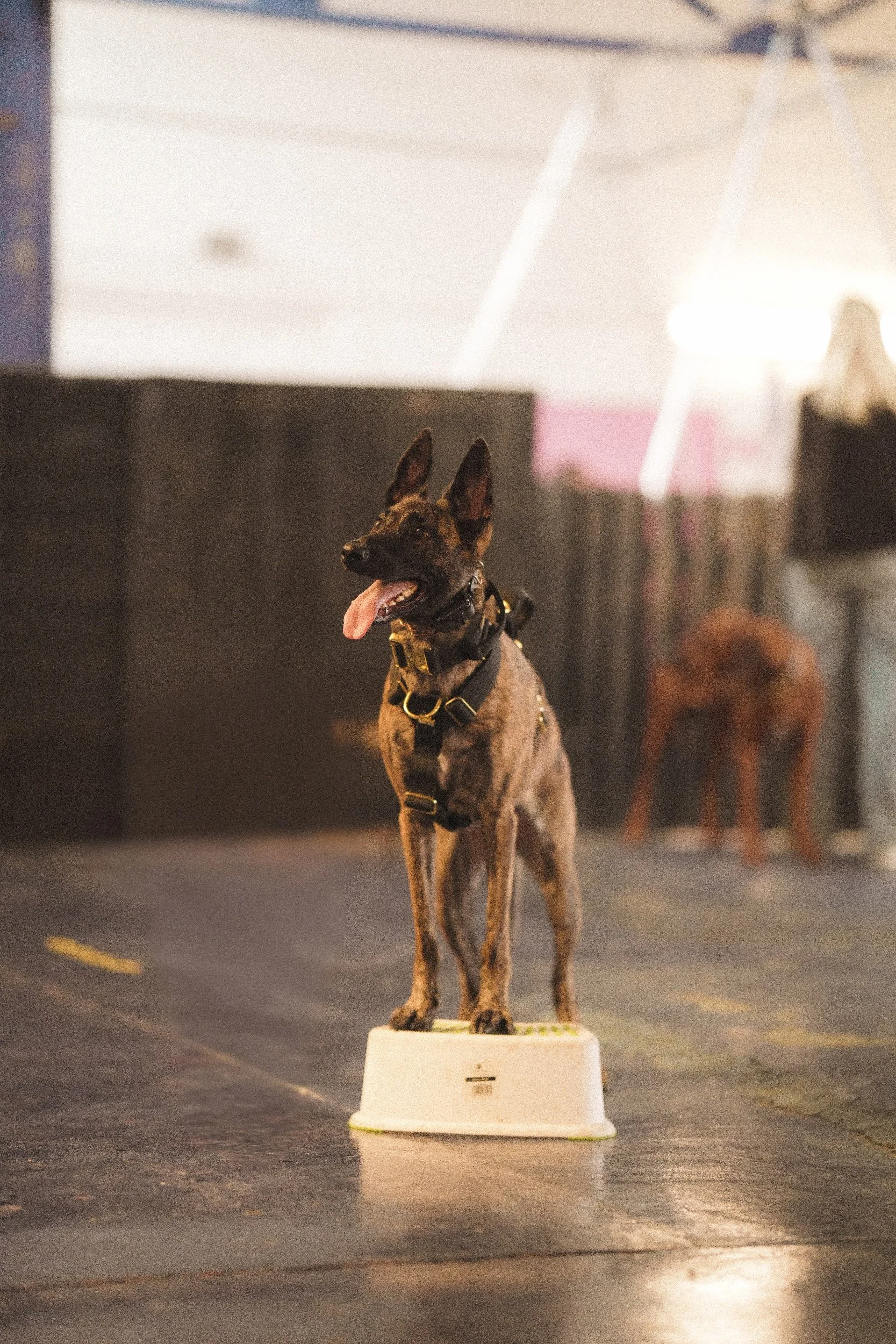
Free shaping is one of my favourite ways to train because it encourages dogs to think for themselves.
Instead of only guiding them with a lure or a command, you wait for them to offer behaviours and reward small steps toward what you’re looking for.
It builds confidence, creativity, and engagement.
Example:
You place a box on the floor.
Your dog looks at it → “Yes!” → treat.
Steps toward it → “Yes!” → treat.
Touches it → “Yes!” → jackpot reward.
Your dog learns to experiment and problem-solve. It’s a brilliant way to build focus, trust, and resilience, especially for nervous or sensitive dogs.
Using Markers in Positive Gear Association
Markers can completely change how a dog feels about equipment such as harnesses, collars, muzzles and grooming equipment.
Rather than just “getting used to it,” we want dogs to feel comfortable and in control.
Using markers makes the process clear, predictable, and positive.
Example: Muzzle or Harness Training
Show the gear. When the dog looks at it, say “Yes!” and reward.
When they move toward it, say “Yes!” and reward again.
When they touch or sniff it, mark and reward.
When they allow the harness near or put their nose into the muzzle, say “Good…” while they maintain the position.
Say “Free!” to end the exercise and give them a short break.
By using markers in this way, your dog learns that the gear predicts good things and that they always have choice in the process.
Positive gear association is extremely useful to get a head start on how your dog feels about wearing certain items.
For example, if your dog has never worn a muzzle and you haven’t taken the time to muzzle-condition them, then being suddenly required to wear one, such as after an injury or during a vet visit, can be stressful and confusing.
By introducing gear positively ahead of time, you’re teaching your dog that these items aren’t something to worry about. They become familiar, safe, and even rewarding.
This is where markers play a big role. You can use them to clearly communicate each small success, such as:
Looking at the muzzle — “Yes!” → treat
Moving toward it — “Yes!” → treat
Touching or placing their nose inside — “Good…” → reward continues
Waiting calmly — “Yes!” → treat
Finished — “Free!” → release
When done consistently, this approach builds confidence and trust. The goal isn’t just getting the dog to tolerate the gear but helping them understand it through clear communication and positive association.
Using Markers in Cooperative Care
Cooperative care is about helping your dog participate willingly in handling, grooming, or vet-type routines.
With markers, you can break everything down into small, positive steps so your dog understands what’s happening and can choose to stay engaged.
Example: Nail Trimming
Dog offers paw → “Yes!” → reward.
You touch paw → “Good…” → reward for staying calm.
Bring the clipper near → “Yes!” → reward.
Trim or file a nail → “Yes!” → reward.
“Free!” → release marker for a break.
This kind of training builds trust because your dog learns what to expect and when it’s over.
It gives them agency — and that changes everything.
By taking small, consistent steps to encourage calmness around grooming equipment and muzzles, you’re setting your dog up for success. When dogs understand what’s happening and feel comfortable with the process, everyone benefits.
Groomers and vets can not only feel safer but are safer, and your dog experiences far less stress throughout handling or treatment. A dog that’s been prepared calmly and clearly is easier to work with, easier to help, and ultimately more confident in unfamiliar environments.